
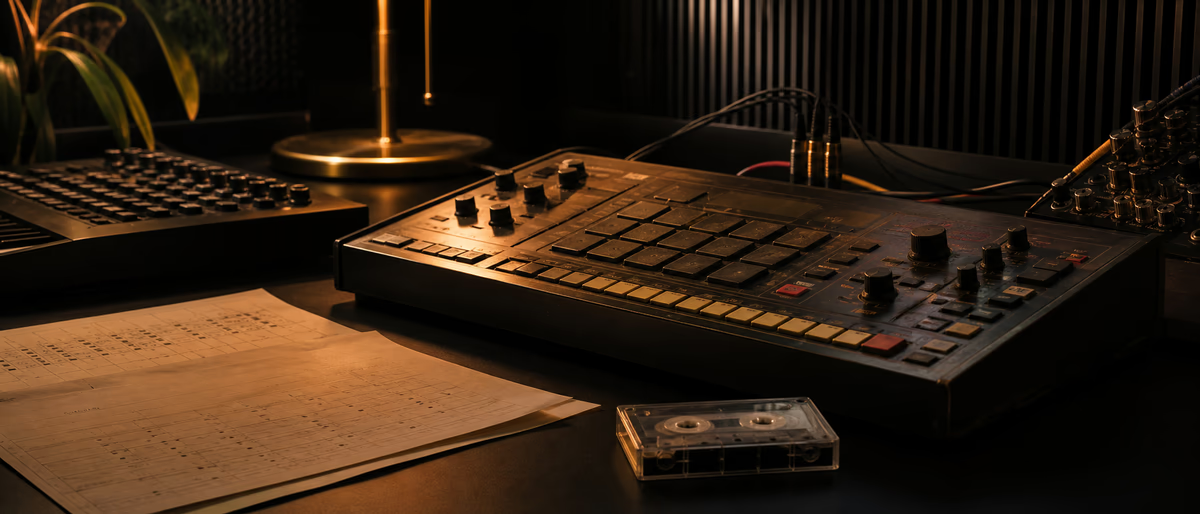
Quick answer: Vaporwave Drums
빠른 답변
Vaporwave drums are usually slower, dustier, and more spacious than modern trap—think soft kicks, gated or washed snares, vinyl noise, and grooves that leave room for chopped, pitch-shifted samples.
Why Drums Matter in Vaporwave
Vaporwave aesthetics revolve around memory, mall culture, and recontextualized commercial sound—often with slowed pitch and heavy effects.[7] Even when the sample is the star, drums decide whether the track feels like a beat or a pure ambient collage.
This guide is drums-only: programming, sound selection, processing, and arrangement without relying on a full sample-flip tutorial. You can later drop these drum beds under any pitched-down source.
Tempos frequently feel slow—either truly low BPM or half-time at moderate BPM. Prioritize pocket over complexity.
Drum Palette
| Piece | Character | Processing ideas |
|---|---|---|
| Kick | Soft, round, short-to-medium | Low-pass; mild saturation |
| Snare/clap | Distant, thin, or gated | Room reverb; chorus; downsample |
| Hats | Low velocity, sparse | Filter; stereo smear carefully |
| Toms/perc | Melodic fills | Pitch down; long tails |
| Foley | Mall noise, VHS, elevators | As ghost rhythm layers |
| Breaks | Chopped old breaks | Time-stretch; bitcrush |
Avoid hyper-bright modern trap kits unless you crush and filter them into the aesthetic. A single well-chosen break processed heavily often beats twenty clean one-shots.
Programming Patterns
- Space Leave beats open; vaporwave drums breathe.
- Swing Gentle shuffle humanization; not aggressive garage swing unless hybridizing.
- Ghost notes Soft snare ghosts create human drag.
- Repetition Hypnotic 4–8 bar loops with tiny variations every 16 bars.
- Drops Remove hats for 2 bars to simulate tape edit cuts.
Bus Processing for Dust and Depth
Common chain: light compression → EQ scoop harsh highs → saturation → optional vinyl crackle send → wide but dark reverb on snare only. Parallel process a crushed version under cleaner drums so transients remain.
Sidechain pads (later) gently to kick if you need pumping nostalgia. For drums-only beats, automate reverb freezes on last hits of phrases for surreal transitions.
If you sample recognizable drums or break records, understand clearance obligations for commercial releases.[4]
Drums-Only Arrangement Map
Even without melodic samples yet, arrange drum energy: intro with only noise+kick, full kit, breakdown to snare reverb tails, return with extra percussion. This makes the drum bed playlist-ready as a loop pack and song-ready later.
Export stems: kick, snare, hats, perc, foley, full bus. Label BPM and intended key center if you already know the sample key you will flip.
Hybrids: Future Funk vs Classic Vapor
Future funk drums may be tighter and more disco-driven; classic vapor drums stay woozier. Decide before layering four aesthetics at once. Your drum bus processing should match that decision—cleaner punch vs heavier dust.
Practice Lab: Vaporwave Drums
Turn this guide into reps. Open a blank project dedicated only to vaporwave drums and limit yourself to the techniques above—no random preset surfing. Set a 45-minute timer, commit audio often, and export three short candidates rather than endlessly polishing one loop.
Create a reference playlist of five tracks that exemplify the outcome you want for How to Make Vaporwave Beats: Drums-Only Focus. Level-match them, note arrangement landmarks on paper, and steal structure—not melodies. Tags related to this workflow include: vaporwave, drums, lo-fi, sampling, breaks, aesthetic.
After each session, write three lines in a producer log: what worked, what failed translation on phones, and one constraint for tomorrow (for example, “only two melody layers” or “no new plugins”). Constraints build taste faster than unlimited options.
On the question “What BPM should vaporwave drums use?” a practical studio answer is: Often slow or half-time. Many producers work from 60–95 effective feels, but follow the sample’s natural groove when flipping. Keep this note in your session template so you do not re-learn it under deadline pressure.
Advanced Notes and Translation Checks
Advanced work on vaporwave drums is usually arrangement and translation, not another plugin purchase. If the idea is strong on a cheap earphone and in mono, you are ahead of most unfinished hard-drive projects.
Print stems earlier than feels comfortable. Stems force decisions and make collaboration, remixes, and content edits easier. Keep a dry/wet strategy for time-based effects so edits remain possible.
On the question “Should I use trap hi-hat rolls?” a practical studio answer is: Rarely for classic vaporwave. Sparse hats fit better unless you intentionally hybridize. Keep this note in your session template so you do not re-learn it under deadline pressure.
On the question “How do I make drums sound ‘old’?” a practical studio answer is: Filter highs, add gentle saturation, vinyl noise, wow/flutter, and room reverb—then blend with a drier parallel for clarity. Keep this note in your session template so you do not re-learn it under deadline pressure.
When you finish, export a short voice-memo critique from yourself as if you were a client. Fix only the top two complaints. Shipping compounds skill; infinite polish hides avoidance.
- Mono check Fold the mix to mono and confirm the hook and low end still read.
- Phone check Play the bounce beside a commercial reference at similar volume.
- Fatigue check Revisit the next day at low volume before release decisions.
- Rights check Confirm samples, vocals, and AI-tool licenses match the release plan.
- Recall check Save a text note of key plugin settings and tempo/key.
Summary and Next Actions
You now have a concrete path for How to Make Vaporwave Beats: Drums-Only Focus: define the aesthetic, execute the core sound-design or business steps, arrange with intention, and QC on real playback systems. The difference between a saved idea and a catalog asset is usually documentation plus a deadline.
On the question “Can I use modern drum samples?” a practical studio answer is: Yes if you process them into the aesthetic. Unprocessed bright kits often break immersion. Keep this note in your session template so you do not re-learn it under deadline pressure.
Schedule the next session before you close the DAW. Put one unfinished bounce in a ‘to finish’ folder with a date. Momentum is part of the craft—especially for long-form tracks, low-end engineering, and label operations where unfinished admin kills releases.
If you need sounds or utilities while practicing vaporwave drums, use verified catalog sources and keep licenses filed next to the pack. Clean inputs make clean catalogs.
Explore lo-fi drums, vinyl textures, and free tools on Plugg Supply for vapor-friendly drum beds.
Learning path
관련 답변 허브
관련 카탈로그
카탈로그의 추가 tutorials
카탈로그 인기도에 따라 순위가 매겨진 Plugg Supply 피드의 추가 tutorials입니다.
![Truefire Focus On Latin Bass [TUTORiAL]](/images/posts/truefire-focus-on-latin-bass-85692.avif?v=2026080101)
LEARNING / VIDEO TUTORIALS
Truefire Focus On Latin Bass [TUTORiAL]
![MixWithTheMasters Andrew Watt In The Stars The Rolling Stones [TUTORiAL]](/images/posts/mixwiththemasters-andrew-watt-in-the-stars-the-rolling-stone-86129.avif?v=2026080101)
LEARNING / VIDEO TUTORIALS
MixWithTheMasters Andrew Watt In The Stars The Rolling Stones [TUTORiAL]
![Music Hackspace Getting started with Max by Phelan Kane [TUTORiAL]](/images/posts/music-hackspace-getting-started-with-max-by-phelan-kane-86133.avif?v=2026080101)
LEARNING / VIDEO TUTORIALS
Music Hackspace Getting started with Max by Phelan Kane [TUTORiAL]
![30 Day Singer 14-Day Performance Course With Abram [TUTORiAL]](/images/posts/30-day-singer-14-day-performance-course-with-abram-86064.avif?v=2026080101)
LEARNING / VIDEO TUTORIALS
30 Day Singer 14-Day Performance Course With Abram [TUTORiAL]
관련 글
LEARNING / VIDEO TUTORIALS
Truefire Focus On Latin Bass [TUTORiAL]
LEARNING / VIDEO TUTORIALS
MixWithTheMasters Andrew Watt In The Stars The Rolling Stones [TUTORiAL]
LEARNING / VIDEO TUTORIALS
Music Hackspace Getting started with Max by Phelan Kane [TUTORiAL]
LEARNING / VIDEO TUTORIALS
30 Day Singer 14-Day Performance Course With Abram [TUTORiAL]
![Music Hackspace Getting Started With Audio FX In Max by Massimiliano Cerioni [TUTORiAL]](/images/posts/music-hackspace-getting-started-with-audio-fx-in-max-by-mass-86062.avif?v=2026080101)
LEARNING / VIDEO TUTORIALS
Music Hackspace Getting Started With Audio FX In Max by Massimiliano Cerioni [TUTORiAL]
![MixWithTheMasters Beck Recording and Producing Ride Lonesome [TUTORiAL]](/images/posts/mixwiththemasters-beck-recording-and-producing-ride-lonesome-86013.avif?v=2026080101)
LEARNING / VIDEO TUTORIALS
MixWithTheMasters Beck Recording and Producing Ride Lonesome [TUTORiAL]
자주 묻는 질문
- What BPM should vaporwave drums use?
- Often slow or half-time. Many producers work from 60–95 effective feels, but follow the sample’s natural groove when flipping.
- Should I use trap hi-hat rolls?
- Rarely for classic vaporwave. Sparse hats fit better unless you intentionally hybridize.
- How do I make drums sound ‘old’?
- Filter highs, add gentle saturation, vinyl noise, wow/flutter, and room reverb—then blend with a drier parallel for clarity.
- Can I use modern drum samples?
- Yes if you process them into the aesthetic. Unprocessed bright kits often break immersion.
- Do I need live drumming?
- No. Programmed and chopped breaks are standard.
- How long should loops be?
- 4–8 bars for beds, with 16-bar variation cycles for full beats.
- What about loudness?
- Vaporwave can be softer and more dynamic. Do not force modern streaming loudness if it kills dust and space.
- Are mallsoft drums different?
- Often even softer and more ambient, with less snare aggression and more environmental rhythm.